Decoding Randomness: Certification Standards for Slot RNGs and Blackjack Software Protocols
Written by Yara Hayes · Nov 1, 2026
Decoding Randomness: Certification Standards for Slot RNGs and Blackjack Software Protocols
Random number generators form the backbone of digital casino games, and certification processes verify their statistical integrity across multiple jurisdictions. Labs conduct extensive battery tests that examine sequence unpredictability, frequency distribution, and long-term balance before any game reaches players. Data from these evaluations shows that approved RNGs must pass millions of simulated outcomes to meet regulatory thresholds set by independent bodies.
Core Testing Protocols in Slot Machine Algorithms
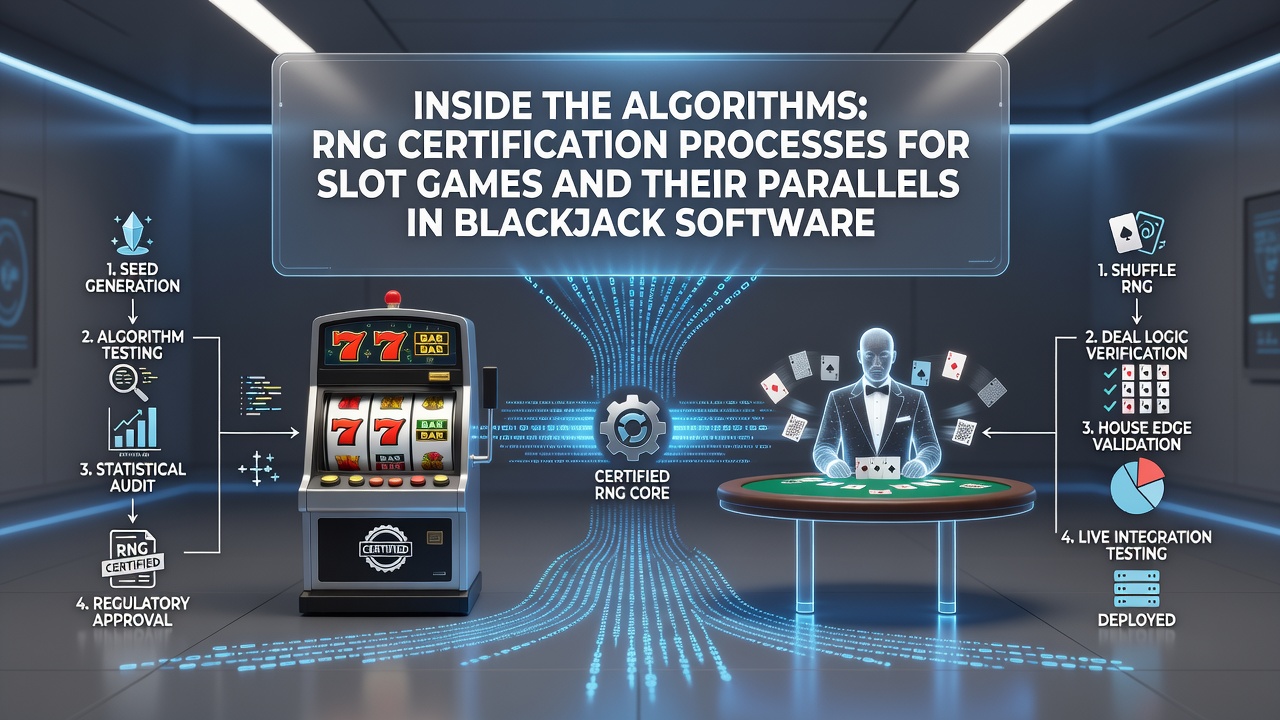
Slot game RNG certification begins with hardware or software source evaluation followed by statistical sampling that covers every possible reel combination. Technicians run chi-square analyses, serial correlation tests, and diehard battery suites to confirm that results remain independent of previous spins. Observers note that certification timelines often span several weeks because regulators require documentation of both the RNG kernel and the mapping algorithms that translate raw numbers into symbols.
Once initial approval occurs, ongoing audits sample live server data at regular intervals to detect any deviation from expected distributions. Figures reveal that major testing houses process thousands of slot titles each year, with failure rates typically below five percent when developers follow established coding standards. In November 2026 several jurisdictions plan to introduce updated entropy requirements that demand higher minimum cycle lengths for newly submitted games.
Application of RNG Standards to Blackjack Software
Blackjack platforms rely on RNGs to simulate card shuffles, yet the certification process mirrors slot procedures while adding specific checks for deck composition and dealing order. Software must demonstrate that each virtual deck resets with uniform randomness and that no card sequence repeats within acceptable probability limits. Researchers discovered that the same statistical suites applied to slots also validate blackjack RNGs, although additional tests confirm proper handling of multi-deck penetration and cut-card simulation.
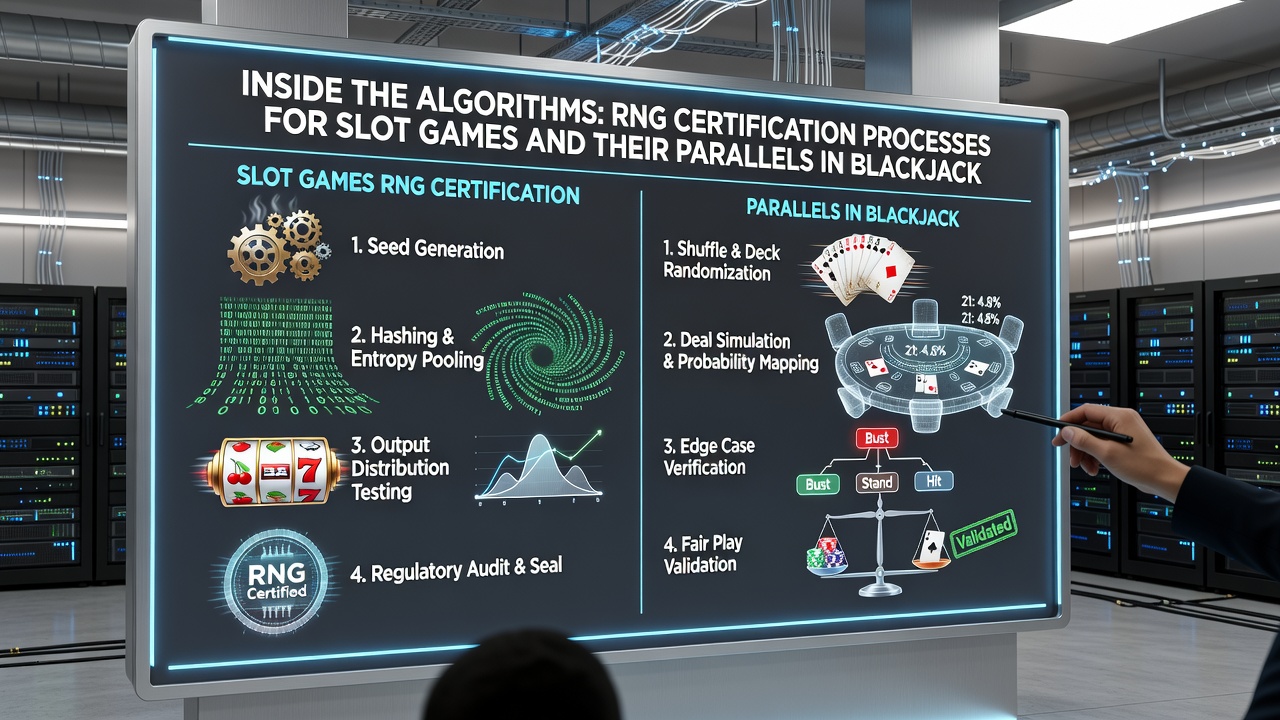
Take one certification case where developers submitted a blackjack variant that initially failed serial correlation checks because the shuffle routine reused seed values too frequently. After code revision the updated module passed all required tests and received approval from multiple regional authorities. Those who've studied these processes know that blackjack RNGs undergo extra scrutiny for side-bet features and progressive jackpot triggers because these elements depend on precise random mapping.
Regulatory Bodies and Geographic Variations
Certification requirements differ by region, with the Nevada Gaming Control Board emphasizing hardware RNG isolation while Australian state regulators focus on continuous live monitoring feeds. According to reports from the New Jersey Division of Gaming Enforcement, blackjack and slot submissions follow identical RNG core standards yet diverge in payout verification protocols. Gaming Laboratories International publishes annual summaries that track global approval volumes and common failure modes across both game types.
European testing houses apply additional cryptographic validation layers that North American counterparts have begun adopting. Data indicates that cross-border operators maintain separate certification portfolios to satisfy each market's documentation demands, resulting in parallel audit trails for identical RNG engines.
Parallels in Audit Frequency and Documentation
Both slot and blackjack software undergo quarterly source code reviews plus annual full re-certification cycles. Experts have observed that the documentation packages required for blackjack closely resemble those for slots, including RNG seed generation methods, mapping tables, and return-to-player calculation spreadsheets. One study revealed that operators who integrate a single certified RNG library across game verticals reduce re-testing costs by approximately thirty percent.
What's interesting is how November 2026 regulatory updates may standardize these audit intervals internationally, aligning documentation formats between slot and table game submissions. Industry organizations such as the Remote Gambling Association have circulated draft guidelines that propose unified reporting templates for RNG performance metrics.
Conclusion
Certification frameworks establish consistent benchmarks that apply equally to slot algorithms and blackjack software, ensuring statistical fairness through identical core testing methodologies. Geographic regulators adapt these frameworks with local documentation requirements while maintaining technical equivalence. Continued alignment of standards, especially with changes scheduled for late 2026, supports broader interoperability across game categories and jurisdictions.